
The Transformation of Neural Networks Over Time
The evolution of neural networks has been a remarkable journey that reflects both scientific ingenuity and technological advancements. Originating in the 1950s, these models were inspired by the way the human brain operates, functioning as a network of interconnected neurons. Initially, these networks were quite rudimentary, consisting of simple algorithms that laid the groundwork for future developments. Over the decades, however, they have become increasingly sophisticated and capable of tackling complex problems that were once thought to be the exclusive domain of human cognition.
One of the pivotal initial milestones in this evolution was the creation of the Perceptron by Frank Rosenblatt in 1958. The Perceptron was a type of linear classifier that served as the first step toward creating artificial neurons. It modeled how a biological neuron might respond to stimuli, a concept which redefined the way we approached machine learning.
Fast forward to the 1980s, another significant breakthrough emerged with the development of Backpropagation. This algorithm allowed neural networks to learn by propagating errors back through the network, enabling them to adjust their weights and improve performance iteratively. This enhanced the ability of networks to solve more complex problems, signaling a turning point for machine learning research and applications.
Today, we stand at the forefront of the Deep Learning revolution, characterized by multi-layered neural networks that can learn from vast amounts of data. These advanced architectures enable machines to process information in ways that closely resemble human thought processes. Common examples of deep learning applications include:
- Image Recognition: Services such as Google Photos use deep learning algorithms to automatically sort photos and recognize faces, transforming how we organize and manage our digital lives. Here, neural networks analyze pixel patterns and features to identify and categorize images effortlessly.
- Natural Language Processing: Chatbots and voice assistants like Amazon’s Alexa utilize these advanced neural models to understand and generate human speech, making interactions more fluid and intuitive. This technology allows machines to comprehend context, sentiment, and even humor.
- Autonomous Vehicles: Companies such as Tesla leverage neural networks to process real-time sensory data from their vehicles to navigate complex environments. This involves recognizing pedestrians, other vehicles, and traffic signals, essential for safe autonomous driving.
The journey of neural networks from their inception to the present underscores a profound transformation in how machines learn and adapt. As we continue to explore developments in this field, it is essential to recognize the vast potential that neural networks hold for enhancing various industries. Whether in healthcare for identifying diseases early through imaging, in finance for predicting market trends, or in entertainment through personalized recommendations, the applications are limitless and continually expanding. Thus, the future of neural networks not only promises advancements in technology but also a reimagining of how we interact with machines in our daily lives.
EXPLORE MORE: Click here to learn about the ethical dilemmas in patient data usage
The Foundations of Neural Networks
The inception of neural networks can be traced back to the compelling desire to mimic the complex functions of human cognition. The early models, particularly the Perceptron, represented a groundbreaking concept. Developed by Frank Rosenblatt in the late 1950s, the Perceptron was a simplified algorithm that accomplished binary classifications based on input features. While primitive by today’s standards, it set the stage for deeper explorations into machine learning and artificial intelligence.
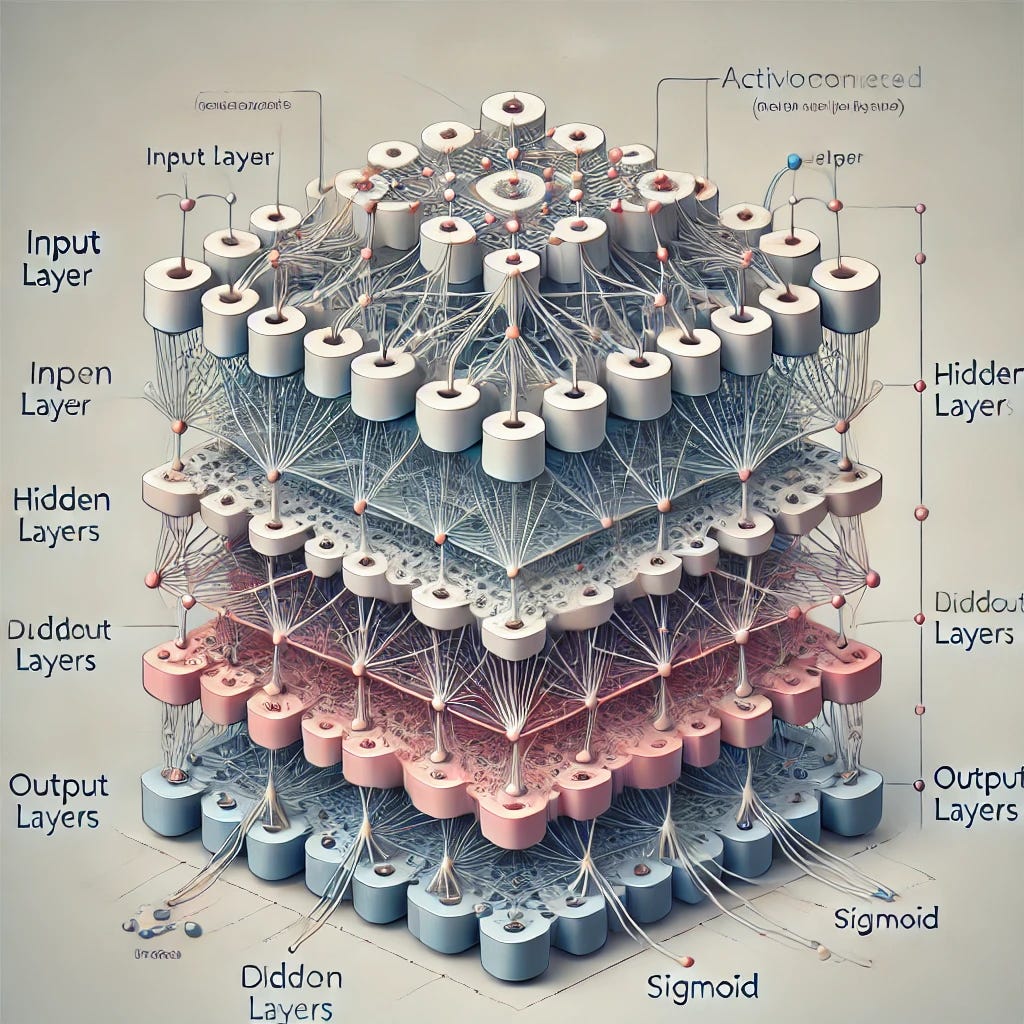
Rosenblatt’s work sparked considerable interest in building systems that could learn from data. The Perceptron comprised an input layer, a summation function, and an activation function — a rudimentary structure that echoed the architecture of biological neurons. In an era where computational power was limited, this design illuminated a path forward, leading researchers to consider more complex architectures.
The Rise of Multi-Layer Perceptrons
The limitations of the Perceptron became apparent as it could only solve linearly separable problems. This paved the way for the Multi-Layer Perceptrons (MLPs), which utilized hidden layers to capture intricate relationships within data. However, the real breakthrough in neural networking came during the 1980s with the introduction of Backpropagation. This algorithm became the cornerstone of training deep neural networks, enabling the adjustment of weights in all layers by calculating gradients of the error with respect to each weight.
Backpropagation encouraged extensive research into neural networks, leading to the birth of architectures that could learn and generalize from more complex datasets. This capability was further fueled by advancements in hardware and the increasingly affordable cost of computing power, allowing researchers to unlock new potentials in the field.
The Birth of Convolutional and Recurrent Neural Networks
As the landscape of neural networks continued to evolve, researchers sought to optimize models for specific tasks, yielding specialized architectures like Convolutional Neural Networks (CNNs) and Recurrent Neural Networks (RNNs). CNNs emerged as a powerful tool for image processing, revolutionizing industries such as healthcare, where they are employed in diagnosing conditions from medical imagery. By simulating the human visual cortex, CNNs excel at recognizing patterns within visual data, which has transformed applications in fields like autonomous driving and surveillance systems.
On the other hand, RNNs were developed to tackle sequential data, making them ideal for tasks related to natural language processing and speech recognition. Unlike traditional neural networks that assumed independence between inputs, RNNs maintain a memory of previous inputs, allowing them to make more contextually relevant predictions. This characteristic has significantly enhanced the efficacy of virtual assistants, enabling them to produce coherently contextualized responses.
The Impact of GPUs on Neural Network Training
The advent of Graphics Processing Units (GPUs) marked another seismic shift in the evolution of neural networks. Initially designed for rendering graphics, GPUs proved to be exceptionally efficient in performing the parallel computations required for training deep neural networks. This technological advancement catalyzed the development of Deep Learning frameworks, enabling researchers and developers to train models on vast datasets in a fraction of the time it took previously.
The rapid advancements in neural network architectures, fueled by increased computational power, have catalyzed a diversity of applications across various sectors. With every leap forward, the possibilities expand, opening avenues for innovation and reimagining how we utilize machine learning in our everyday lives.
The Evolution of Neural Networks: From the Perceptron to Deep Learning
The journey of neural networks has been marked by a series of breakthroughs that have revolutionized the field of artificial intelligence. The initial concept was born in the 1950s with the development of the perceptron, a simple model designed to mimic the way human neurons function. While limited in its capabilities, the perceptron laid the groundwork for more complex architectures. As computing power surged and the availability of large datasets increased, researchers began to explore deeper and more sophisticated models. The introduction of multi-layer feedforward networks allowed for the creation of profound learning systems, known as deep learning. This evolution unlocked a myriad of possibilities, enabling machines to excel in image recognition, natural language processing, and even autonomous driving.One of the significant milestones during this growth was the development of the backpropagation algorithm in the 1980s, which allowed networks to learn more effectively by adjusting weights through error feedback. Further advancements have included the rise of convolutional neural networks (CNNs) and recurrent neural networks (RNNs), which have vastly improved the performance of neural networks in specialized tasks. Today, we stand at the forefront of a new era in AI driven by deep learning, where models are capable of extraordinary feats, such as generating human-like text and identifying diseases with incredible precision. The integration of neural networks into various industries is not just a trend, but a transformative process that is reshaping the way we approach complex problems. The future promises even more exciting developments as we continue to unlock the potential of these intricate systems. As we delve further into the impact and applications of these technologies, it becomes crucial to understand both their capabilities and the ethical implications they carry. The evolution of neural networks is not merely a technical story; it encapsulates a narrative that intertwines innovation with responsibility in the digital age.
| Category | Advantages |
|---|---|
| Deep Learning Models | Ability to handle vast amounts of data and learn complex patterns |
| Versatility | Applicable in various fields, including healthcare and finance |
LEARN MORE: Click here to discover how data analysis is transforming AI recommendations
Transformative Applications of Deep Learning
The rise of Deep Learning has triggered a revolution across various domains, thanks to its robust ability to handle unstructured data. With the integration of multiple hidden layers in neural networks, Deep Learning models can learn high-level abstractions, enabling them to outperform traditional algorithms in tasks ranging from image classification to game-playing. This leap paves the way for innovative applications, enhancing fields like healthcare, finance, and entertainment.
In the realm of healthcare, Deep Learning has proven instrumental in enhancing diagnostic precision. For example, convolutional neural networks (CNNs) analyze medical images with remarkable accuracy, assisting radiologists in identifying anomalies such as tumors in mammograms or lesions in MRIs. A 2020 study by researchers at Stanford University found that a CNN model outperformed human radiologists in diagnosing skin cancer, demonstrating the immense potential for machine learning to support medical professionals.
In the finance sector, Deep Learning facilitates fraud detection and risk assessment by analyzing vast datasets and identifying patterns that might escape human scrutiny. Techniques like recurrent neural networks (RNNs), which can process sequences of data, are employed in algorithmic trading to predict market trends and make split-second decisions that capitalize on fleeting opportunities. The implementation of these models has led to significant cost savings and increased efficiency.
The Role of Transfer Learning
Another noteworthy advancement in the landscape of neural networks is transfer learning. This technique allows models pre-trained on large datasets to be adapted for specific tasks with minimal additional data. This innovation is particularly valuable for industries where labeled data is scarce. For instance, a model trained on a vast collection of general images can be fine-tuned to recognize specific features in specialized domains, such as identifying specific plant species or detecting defects in manufacturing processes.
By leveraging pre-existing knowledge, transfer learning accelerates the deployment of neural networks in real-world applications, making advanced AI accessible to a broader range of industries. As organizations harness this potential, they can develop solutions rapidly, diversifying their capabilities without the need for extensive resources.
Bias and Ethical Considerations
However, as the impact of neural networks grows, so does the importance of addressing ethical considerations. The training data for these models can inadvertently embed biases, leading to unfair outcomes in applications like hiring, loan approval, and law enforcement. Research has revealed that facial recognition systems, for example, exhibit varying levels of accuracy based on race and gender, raising substantial concerns about equity and fairness.
The conversation around these biases has ignited a push for more transparency and accountability in AI systems. As organizations strive to develop ethical frameworks, researchers are exploring methods to identify and mitigate biases within datasets, emphasizing the need for diverse data and inclusive model training practices.
The Future of Neural Networks
Looking ahead, the evolution of neural networks signals a promising horizon for artificial intelligence. As researchers continue to innovate and expand the capabilities of deep learning models, anticipate breakthroughs that integrate with other emerging technologies, such as quantum computing. These advancements may unlock unprecedented computational power, further enhancing the sophistication of neural networks and enabling them to tackle previously insurmountable challenges.
In a world increasingly driven by data, the potential applications of neural networks are boundless. With each advancement, we inch closer to machines that can not only mimic but also augment human intelligence, transforming our lives in extraordinary ways.
DIVE DEEPER: Click here to explore the fusion of art and AI
Conclusion: The Journey Ahead for Neural Networks
The evolution of neural networks from the simple Perceptron to sophisticated deep learning architectures represents a remarkable journey marked by innovation and discovery. As we have seen, the ability of these advanced models to process vast amounts of unstructured data has transformed industries, leading to groundbreaking applications in healthcare, finance, and beyond. The advent of techniques such as transfer learning has made these powerful tools even more accessible, enabling organizations to quickly adapt existing models to meet specific needs.
However, as neural networks continue to revolutionize the world around us, it is crucial to maintain a vigilant focus on the ethical implications tied to their use. The inherent biases that can seep into models raise significant concerns about fairness and equity in critical decision-making processes. Addressing these challenges is paramount for ensuring that advancements in AI do not perpetuate existing inequalities.
Looking toward the future, we can expect ongoing innovation that not only enhances the capabilities of neural networks but also integrates with emerging fields like quantum computing. Such integrations may unlock new frontiers of computational power, enabling solutions to complex problems previously deemed unsolvable. As this journey unfolds, it is essential for all stakeholders—researchers, policymakers, and practitioners—to navigate this landscape thoughtfully and responsibly.
By seeking a balance between technological progress and ethical considerations, we can harness the full potential of neural networks, unlocking a future where machines do more than just mimic human intelligence—they work in harmony with it, driving societal advancement in remarkable ways.