
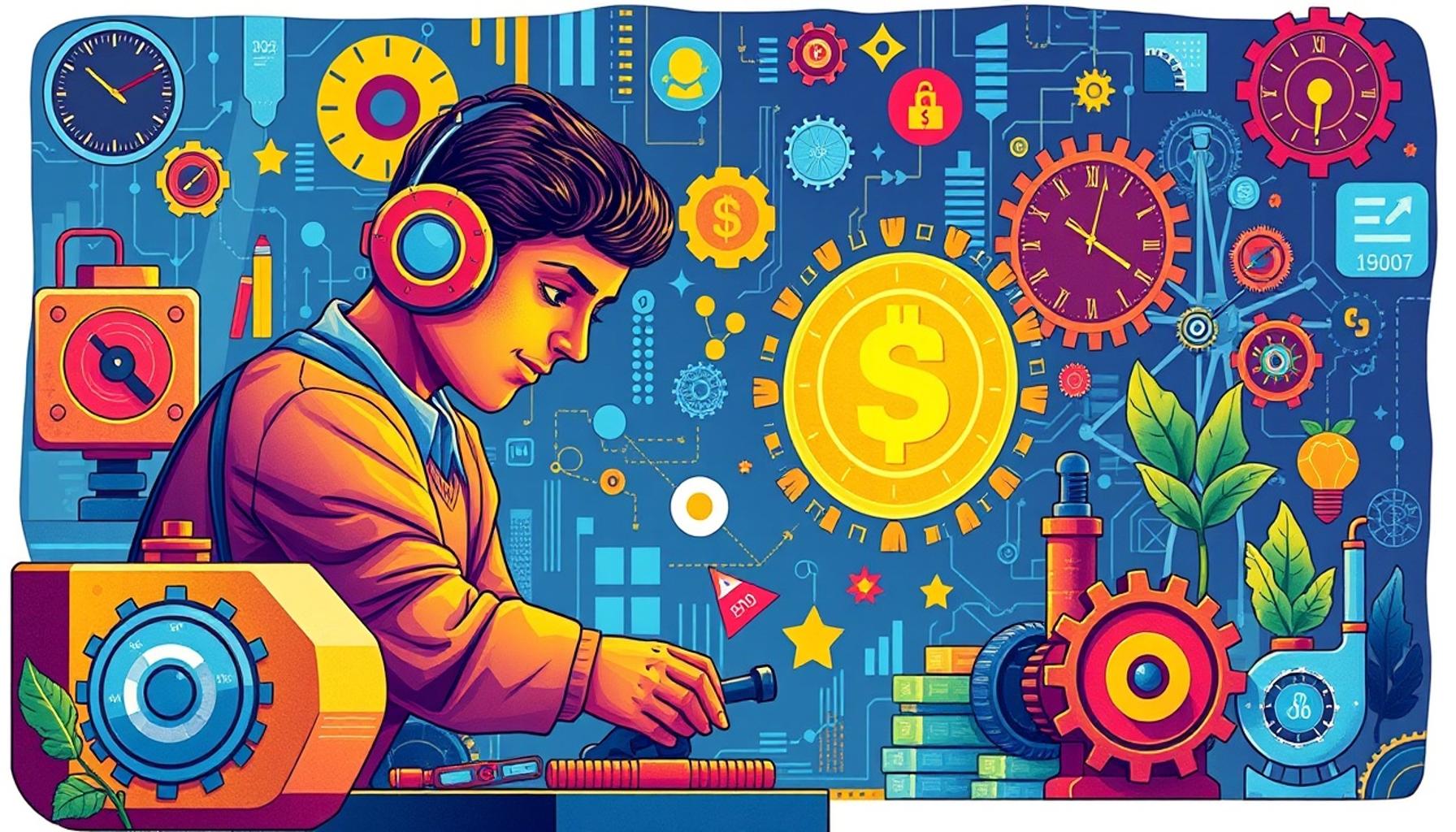
The Impact of Machine Learning on the Modern Workforce
The rapid advancement of machine learning is undeniably a game changer for industries across the globe. In the United States, companies are increasingly embracing AI-driven tools, which not only streamlines processes but also presents challenges and opportunities that necessitate thoughtful consideration and strategic action.
One of the most substantial impacts is the automation of routine tasks. In sectors like data entry, customer service, and manufacturing, machine learning algorithms can handle repetitive tasks with precision and speed. For instance, automated chatbots are now commonplace in customer service roles, providing instantaneous responses to inquiries, significantly reducing wait times, and allowing human employees to focus on more complex issues. A report from McKinsey suggests that automation could take over up to 30% of tasks in around 60% of jobs, highlighting a significant shift in operational dynamics.
However, this shift is not merely about reduction. It also leads to new job creation. Positions in emerging fields such as data analysis, AI ethics, and machine learning engineering are rising in demand. To illustrate, companies like Google and IBM are seeking experts who can not only build machine learning models but also address ethical considerations when deploying AI in real-world scenarios. These jobs require specialized skills, opening avenues for professionals willing to invest in continuous learning and training.
In addition to new roles, there is a notable shift in skills required across various industries. The need for adaptable, tech-savvy employees has never been greater. Workers must now embrace continual education and upskilling to remain relevant. This wave of change is prompting businesses to invest in training programs that equip employees with essential skills such as programming, data literacy, and critical thinking. For instance, many firms are partnering with online educational platforms like Coursera and Udacity to provide their employees with the necessary tools to succeed in this evolving landscape.
While the potential benefits of machine learning are extensive, it is important to recognize the accompanying challenges. Concerns around job displacement, ethical use of AI, and workforce inequality need to be addressed. The balance between maximizing advantages and mitigating risks will be crucial as workers, employers, and policymakers navigate the future of work.

As we delve into the transformative journey of machine learning, we invite you to reflect: How can we ensure that technological advancements serve humanity’s best interests? What innovative solutions can emerge from the synergy between humans and machines? Engaging with these questions will be vital as we move forward into this exciting yet challenging new era.
DISCOVER MORE: Click here to dive deeper
Reimagining Jobs: The Push and Pull of Automation
As machine learning continues to evolve, automation is reshaping the job landscape in profound ways. Industries are experiencing a paradigm shift where mundane, repetitive tasks are increasingly being handled by intelligent algorithms. This transition brings both challenges and opportunities—the need to strike a balance between efficiency gains and workforce readiness is more critical than ever.
The rise of automation is evident in various sectors such as logistics, finance, and healthcare. For example, in logistics, companies like Amazon are implementing machine learning to optimize supply chain operations, resulting in faster delivery times and cost savings. In finance, algorithms can analyze market trends and advise traders on investment decisions in real-time, making operations more efficient. This technological integration not only minimizes human error but also accelerates processes that typically require extensive manual input.
However, this newfound efficiency comes at a cost—one that many fear might lead to job losses. In response to these fears, it is essential to examine data revealing the potential for job displacement. According to the World Economic Forum, automation may displace around 85 million jobs globally by 2025. Yet, it’s not all doom and gloom; the same report forecasts that the advent of new technologies could also create 97 million new roles, emphasizing the fundamental shift rather than outright loss.
What kinds of opportunities are emerging in this evolving landscape? Consider the following areas where new job roles are likely to develop:
- AI and Machine Learning Specialists: As companies implement automated systems, there is an increasing demand for professionals with expertise in developing and maintaining these technologies.
- Data Ethics Compliance Officers: With machine learning algorithms influencing significant decisions, there’s a growing need for individuals who can ensure ethical practices are maintained.
- Cybersecurity Experts: As more organizations adopt automated processes, safeguarding data and systems against breaches becomes paramount.
- Human-Machine Interaction Leaders: Fostering effective collaboration between humans and machines requires specialized roles to design user-friendly interfaces and ensure productive interactions.
While the potential for new job creation is promising, significant challenges must be addressed. The upskilling of the existing workforce is crucial in this transition. Many workers find themselves in roles that no longer exist or are quickly becoming obsolete. Consequently, businesses must become proactive in providing training and resources. In fact, a survey by PwC indicates that 74% of employees feel a need to learn new skills regardless of their current position due to automation influences.
Furthermore, as automation changes the nature of jobs, it raises important questions regarding equity and access. Workers in lower-skilled positions are often at greater risk of displacement, which means that as opportunities arise, disparities could widen if adequate support isn’t provided. Bridging this gap will require collaboration among employers, educational institutions, and community organizations to create equitable pathways into emerging fields.
This evolving landscape compels us to rethink our approach to employment, skills, and workforce development. As we venture further into this era of automation, understanding the implications of machine learning will be essential to harnessing its potential for the betterment of society and the economy.
Leveraging Automation for Increased Efficiency
As companies progressively incorporate machine learning technologies, the workforce landscape is evolving dramatically. Automation offers a plethora of benefits that streamline operations and boost productivity. By harnessing intelligent algorithms, businesses can analyze vast amounts of data quickly and accurately, reducing the time spent on repetitive tasks.
Enhancing Decision-Making
With data-driven insights derived from machine learning, organizational leaders can make informed decisions faster. Predictive analytics assists in forecasting trends, resulting in improved strategic planning and resource allocation. This not only enhances efficiency but also drives innovation, allowing companies to adapt swiftly to market changes.
Creating New Job Roles
Contrary to common fears surrounding automation, it is pivotal to recognize that new roles continue to emerge as traditional tasks become automated. Professions such as data scientists, AI specialists, and algorithm trainers are just a few examples of how the job market is shifting. These roles require advanced skill sets, creating opportunities for workforce reskilling and upskilling.
Promoting Work-Life Balance
Automation empowers employees by relieving them from monotonous tasks, allowing them to focus on high-value activities that emphasize creativity and problem-solving. This fosters a healthier work-life balance, increasing job satisfaction and employee retention. Furthermore, the prospect of working alongside advanced technologies can lead to a more engaged and motivated workforce.
Table of Advantages
| Automation Advantage | Impact on Workforce |
|---|---|
| Increased Efficiency | Frees employees from repetitive tasks. |
| Enhanced Decision-Making | Automated analytics provides real-time insights. |
| Job Creation | New roles for data and AI specialists emerge. |
The transformation brought about by machine learning signifies not an end to jobs, but a transition towards more meaningful work. As we explore these advancements, it’s essential to remain proactive in developing skills that align with the future demands of the workforce.
DISCOVER MORE: Click here to dive deeper
Transformative Skills for Tomorrow’s Workforce
In an age where machine learning continues to redefine sectors and job roles, the imperative for transformative skills is more urgent than ever. Workers not only need to adapt to the technological landscape but also cultivate a unique blend of skills that enhance their ability to work alongside machines. This fusion of skills is crucial to navigating the complexities of tomorrow’s workplace.
One area of emphasis is on soft skills, which are increasingly viewed as essential in a technology-driven environment. While machines excel at processing data and executing tasks efficiently, human attributes such as creativity, critical thinking, and emotional intelligence remain irreplaceable. A study by Korn Ferry predicts that by 2030, there will be a considerable shortage of such skills in the workforce, indicating a significant opportunity for individuals who invest in developing their soft skill set.
Moreover, digital literacy is non-negotiable. Workers across all fields will need to leverage technology confidently; this includes understanding algorithms, data analytics, and basic programming. The ability to interpret data and translate it into actionable insights is becoming a core competency. Programs offered by community colleges and online platforms, such as Coursera and edX, are crucial in equipping individuals with these vital digital skills, allowing learners to engage with machine learning technologies in meaningful ways.
The job market is also seeing a rise in the demand for interdisciplinary professionals who can navigate multiple fields. For example, experts in data science combine knowledge from statistics, computer science, and domain expertise to make informed decisions based on machine learning predictions. Similarly, marketing professionals who understand analytics can design targeted campaigns, effectively leveraging data to optimize customer engagement. As these cross-functional roles gain prominence, workers equipped with multifaceted knowledge will find themselves in a promising position.
The creation of innovation hubs across the United States is yet another trend contributing to workforce transformation. Spaces dedicated to collaboration between businesses, educational institutions, and technology specialists foster environments where creative solutions emerge. For instance, initiatives like the Innovation Districts in cities such as Kansas City and Detroit are working to catalyze job growth through partnerships that bridge academia and industry. These hubs not only provide physical space but also act as incubators for new ideas and entrepreneurial ventures fueled by advances in machine learning.
Looking ahead, organizations must prioritize an adaptable workforce strategy that incorporates ongoing training and education. The rapid pace of change dictated by machine learning innovations means that companies are bonded to a commitment to lifelong learning. Corporations like Amazon have set benchmarks by offering substantial upskilling programs to their employees, including initiatives that fund training in machine learning and cloud computing. By doing so, they are ensuring that their workforce remains relevant and competitive in a technology-driven landscape.
The potential for machine learning to revolutionize the workplace is vast. However, unlocking these opportunities will necessitate a proactive approach to workforce development that embraces change rather than resists it. Employers, educators, and individuals must coordinate to create a resilient workforce capable of navigating the shifting sands of automation and fostering an inclusive future of work.
DISCOVER MORE: Click here to delve into the ethics of AI and neural networks
Charting a Path Forward
As we stand on the brink of a profound transformation driven by machine learning, the future of work is poised to offer an array of both challenges and opportunities. The integration of automation into various industries signifies not just the displacement of traditional roles, but the emergence of new ones that require a different skill set. In light of this, upskilling and reskilling the workforce have become essential priorities for individuals and organizations alike.
The trends highlighted—emphasizing the importance of soft skills, digital literacy, and interdisciplinary expertise—paint a picture of the workforce that must continuously adapt to thrive in a technology-rich environment. The rise of innovation hubs serves as a beacon of collaboration, fostering an ecosystem that nurtures creativity and entrepreneurial spirit. In these spaces, the fusion of industry and academia can spark revolutionary ideas that harness the power of machine learning.
Moreover, the commitment to lifelong learning is crucial. As seen with companies like Amazon, investing in employee development not only prepares workers for an ever-evolving job landscape but also positions organizations as leaders in the competitive market. This dynamic creates a symbiotic relationship between technology and human input, where each enhances the other’s capabilities.
Ultimately, embracing machine learning holds the potential to reshape the workplace landscape dramatically. However, this will require both vision and collaboration among educators, employers, and employees to ensure a future of work that is both innovative and inclusive. By proactively adapting to these changes, we can build a workforce ready to navigate the complexities of automation while continuing to create meaningful opportunities for growth and success.